
Dazzling Western Ghats
Dr. Salim M.A. Ali, widely known as simply Dr. Salim Ali, was exhausted. India’s famous ornithologist and naturalist flopped down on the protruding roots of a giant tree and reached for his bottle of orange juice that he was carrying with him. After all the tiring work he had done over the past couple of hours, it was nearly a tumble. Dr. Ali was thirsty and gulped down the fluid. The year was 1987 and this was just a few months before the “Bird Man of India” breathed his last at the age of 90.
On this particular day, he was in Thattekkad Bird Sanctuary situated on the banks of Periyar some 60 miles from Kochi (formerly Cochin) in the southern state of Kerala. Dr. Ali fished out his binoculars and trained his still-sharp eyes through the lenses, evidently an action he had performed countless times in his life and one that came quite naturally to him whenever he was in the wild outdoors.
As he scanned the landscape around, he seemed quite pained. His disciple and lifelong student, Dr. R. Sugathan, was accompanying him, “What a plight! Not even a single Great Indian Hornbill. I counted nearly 60 of them in dazzling flight earlier in the Periyar forest. I feel this drastic decline is due to habitat destruction. No tall trees. All felled. Without tall trees and natural cavities in them, hornbills cannot nest,” he said with regret.
The enormous and slightly grotesque Great Indian Hornbill had always engaged and fired Ali’s imagination with its slow and heavy flight accompanied by rhythmic beats of its broad wings.
Today, the Great Indian hornbill is not explicitly classified as ‘Endangered’ in the Western Ghats but its status still remains ‘Vulnerable’ in the IUCN Red List because of habitat loss and hunting. Also known as the Great Pied Hornbill, it is one of the most distinctive birds of the sprawling Western Ghats from Tapti to Kanyakumari, a region well-known for rich biodiversity.
When the huge bird takes flight and is gliding past overhead, the sound you hear seems startlingly similar to an old steam engine chugging past – there’s the unmistakable ‘whoosh’ and ‘chuff’ reminding old-timers of railway locomotives. It occurs due to the Great Indian Hornbill’s large size, its powerful wings flapping rhythmically and causing a significant amount of air displacement.
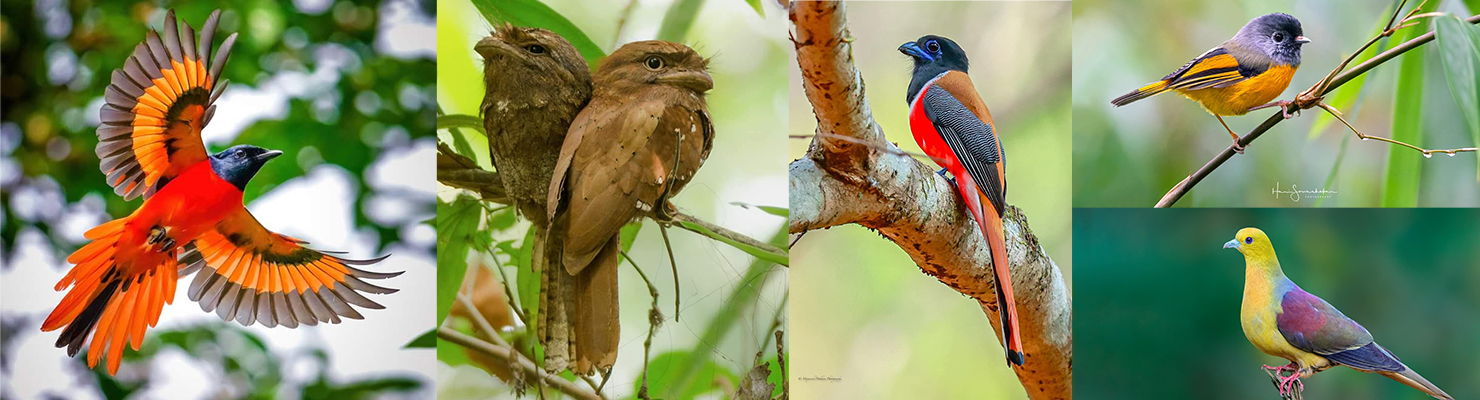
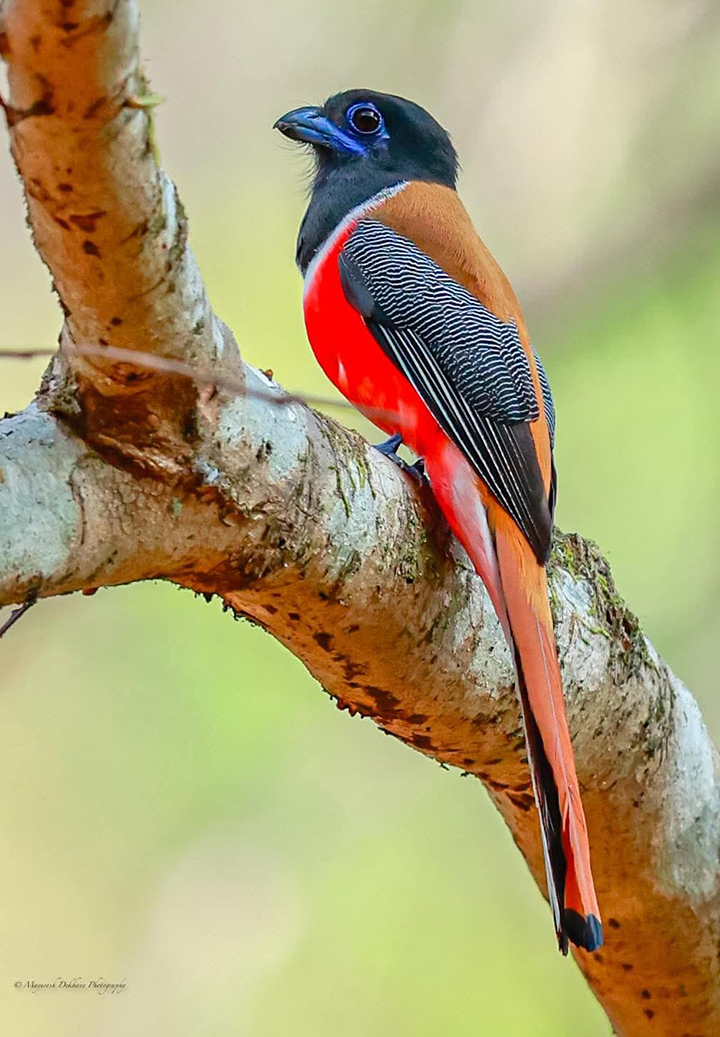
The Great Indian Hornbill is just one of the countless birds in the Western Ghats. The region is home to an amazingly rich diversity of birdlife, including several endemic species. The list of birds of Western Ghats covers the entire spectrum from drab to dazzling. A visitor may well expect to see a bewildering bandwidth of colours in the plumage of the birds; there is the rather subdued Malabar Grey Hornbill as well as the stunning Malabar Trogon.
The Western Ghats has been blessed with a wide range of avifauna. It is estimated that there are approximately 1200 species of birds. According to current-day ornithologists, of these at least 16-29 species are endemic.
Credit must be given to the early English administrators, army officers, and planters who undertook extensive surveys over and above their regular roles to discover and reveal the rich biodiversity of Western Ghats to the world.
Out here, fenced by blue-green mountains whose peaks are draped in misty clouds spreads the ethereal landscape of the Western Ghats. Here, you find the verdant beauty of the Palakkad district of Kerala that has given birth to some enthralling wildlife hotspots. You have the majestic Parambikulam Tiger Reserve that is a premier destination for bird watching featuring over 300 avian species, including more than a dozen endemic ones. The profusion of wild peacocks has led to the creation of Choolannur Pea Fowl Sanctuary, locally known as Mayiladumpara or ‘the rock where peacocks dance’. This 500-acre protected area serves as a natural haven for hundreds of wild peacocks.
Little wonder that the Western Ghats mountains have often been described as the true ‘Cradle of Bird Watching’ and avian study in India.
In his later years, Dr. Salim Ali carried out the Kerala Bird Survey in 1993. His book ‘Birds of Kerala’ is an authoritative work describing the bird habitat of the region in detail. The Parambikulam forest with its diverse bird life has been made immortal in his popular autobiography ‘The Fall of a Sparrow’.
We know from accounts that Dr. Ali was amazed by the Great Indian Hornbill in the magical natural landscape of the Western Ghats but he was equally impressed by other forms of avian presence. There is mention of a grand old tree in Parambikulam that was supposedly more than 70 years old. Its natural cavities were transformed naturally into nests for members of the avian world. It was home to Broad-billed rollers, countless smaller colourful birds and a variety of doves. Whenever he was in the Parambikulam forest, Dr. Ali observed the tree with rapt attention and narrated to his mentees how it had held nests of generations of birds over the years.
Unfortunately, four years after his death the tree was brought down by a gale.
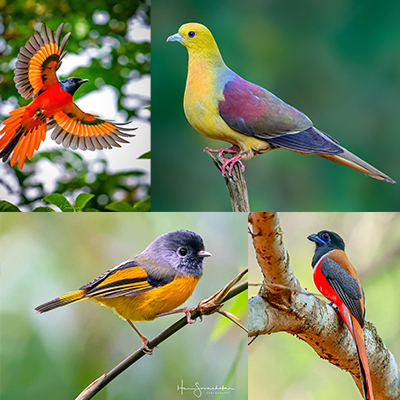
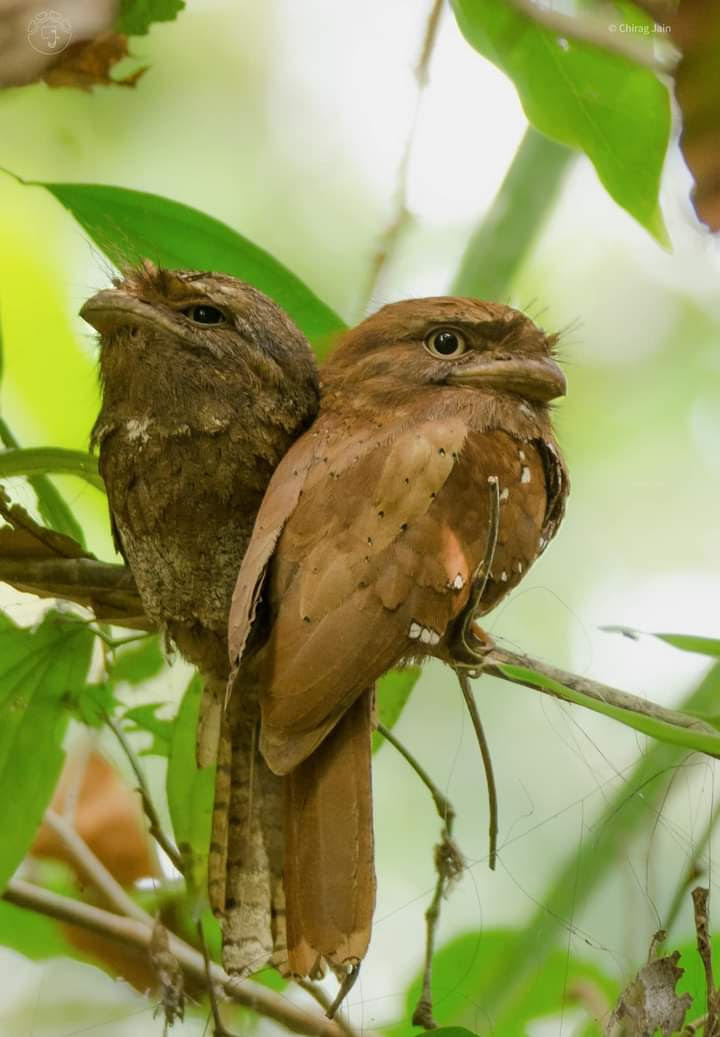
Another bird that he found hugely interesting was the Ceylon (Sri Lanka) Frogmouth. An elusive strange-looking nocturnal bird, this grey-brown nightjar-like bird gets camouflaged among dry leaves. It is vermiculated and mottled with white- buff- brown black and chestnut plumage and a rather wide mouth making it look like a frog.
A little anecdote here about Dr. Salim Ali and the Ceylon frogmouth. Early English bird watchers had sighted the bird and described it dutifully in their accounts. When Dr. Salim Ali conducted his bird surveys in Kerala and tribal guides and watchers accompanying him mentioned the bird, he at once identified it as the frogmouth and was keen to see it for himself. Alas, as it sometimes happens with ornithologists, despite his keen efforts, the bird kept eluding him and trying his patience.
Finally, on a moonlit night, he heard its clear call and was overjoyed – there was the Ceylon frogmouth was emitting its notes incessantly! Dr. Salim Ali describes the incident in ‘Birds of Kerala’. He continued with his efforts for a sighting but had to be content with only a fleeting view.
Later, Dr. R. Sugathan as Ornithologist in Thattekad Bird Sanctuary floated a project to protect the Ceylon Frogmouth. The project was successfully implemented by the forest department. The Ceylon frogmouth’s population is stable now and its Conservation Status is thankfully of ‘Least Concern’.
The male Malabar trogon is a colourful bird. Dr. Ali describes it as a “brilliantly- coloured”. While the female is quite dull, the male is sought after by wildlife photographers for its resplendent bright red belly and slaty black head ending in a prominent white “belt” or band. The Malabar trogon is completely arboreal.
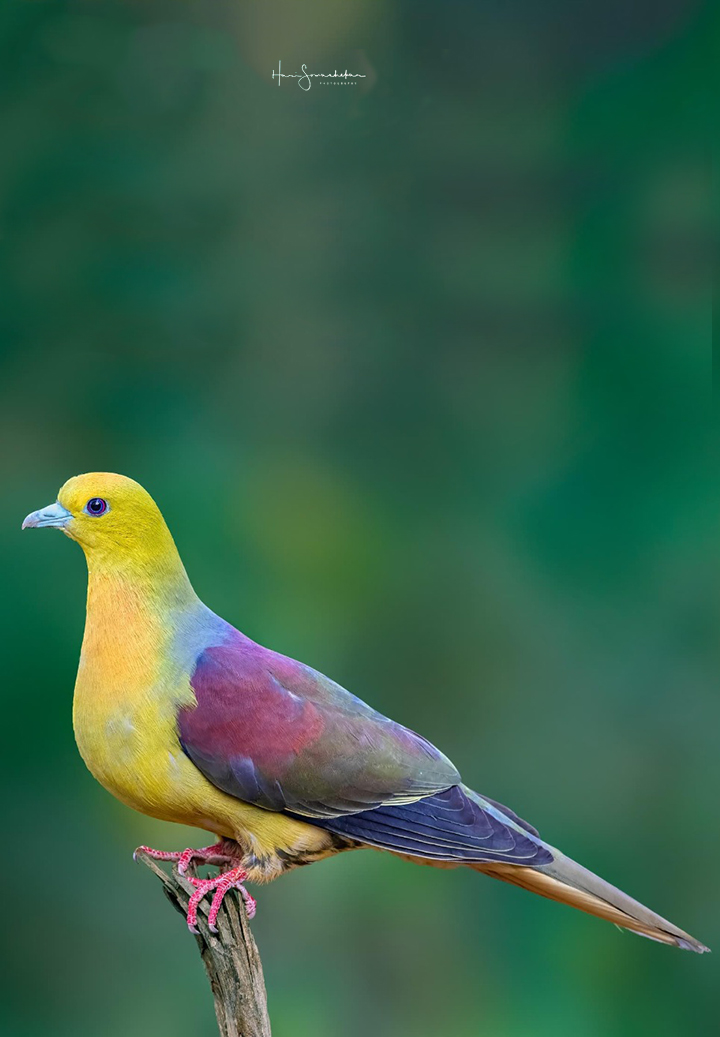
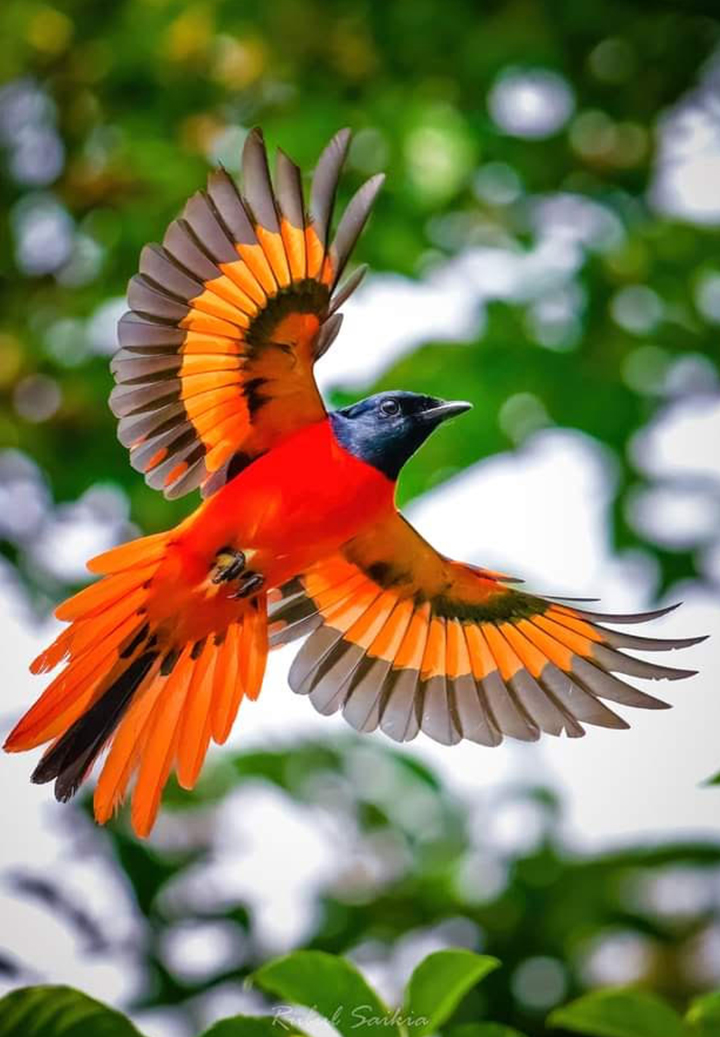
The Western Ghats that are believed to be more than 150 million years old with a rich biodiversity remain a veritable treasure trove for wildlife enthusiasts, nature lovers, biologists, scientists alike. The avifauna here, as mentioned earlier, is rich and diverse thanks to the variety of habitats in the region. Some of the birds of the Westetn Ghats that you should keep a lookout for on your visit include the Malabar whistling thrush, Nilgiri flycatcher, Nilgiri Wood pigeon, Black- and- orange flycatcher, Minivet, Emerald dove, Golden oriole, Indian roller, and Blue-winged parakeet.
About the author – G. Shaheed is a well-known journalist, environmental writer, and researcher who explores the world of birds through his work and reportage. He has worked as the Bureau Chief and Chief Reporter of the prominent Malayalam daily, Mathrubhumi, and continues to write incisive articles on nature, wildlife, and the environment.
Photos by Prasad Ambatt
This article was first published in Environ Jul-Aug-Sep 2025.
TAGS –
