
Butterflies of North Eastern INDIA
Text By – Gurjeet Walia
Photos by – Biswajit Roy Chowdhury
Kaiser-i-Hind. Great Archduke. Chocolate Tiger. Punchinello. Indian Purple Sapphire. If you are thinking these are names of some exotic dishes or even flowers, we forgive you. They are, in fact, names of some charming butterfly species that are found in Northeast India. The Northeastern part of India contains some of the world’s most northernly tropical rainforests. This region, that stretches across the states of Assam, Meghalaya, Mizoram, Nagaland, Sikkim, Manipura, Tripura, and Arunachal Pradesh receives substantial rainfall – often exceeding 2300 meters – that enables several lush, dense evergreen and semi-evergreen ecosystems to thrive in the region.
GOOD TO KNOW
Northeastern India is home to 900 of India’s roughly 1300 butterfly species. Put in another way, the North-East has about 66.85% of India’s butterfly diversity despite covering only 7.7% of the landmass.
The northeastern part of India is every entomophile’s delight, being home to a mind-boggling diversity of butterflies. Scientists are adding newer ones every year to this huge range.
What makes this region so friendly for these fluttering bits of joy? Northeast India is ideal for butterflies – and a range of life forms for that matter – thanks to its diverse habitats from lush tropical valleys to high snow-capped mountains.
The landscape comprising of varied elements as the Eastern Himalaya, Northeast Hills, and the Brahmaputra and Barak Valley plains is perfect for a high degree of endemism and this includes many different species of butterflies.
The temperatures tend to vary significantly; in summertime, we find a humid climate with highs of 38° C in some places. The higher-altitude areas in Arunachal Pradesh and Sikkim stay considerably cooler with temperatures between 15 -20 °C max. Then, there’s the abundant moisture that comes from the monsoons. During the southwest monsoon between May to September, all the northeastern states experience significant downpours.
All these come together to creates the enormously rich ecosystem that supports a wide range of host plants and nectar sources that in turn support a vast number of butterfly species, thus turning the region into a biodiversity hotspot.
GOOD TO KNOW
Butterflies act as indicators of a healthy ecosystem. If they disappear, it can be a signal of serious environmental degradation from factors like pollution or habitat loss.
Nearly a 100 years ago, Evans (1932) reported a whopping 962 species of butterflies belonging to 6 families from North-Eastern states except Sikkim Himalaya. Of these, 303 species of butterflies were recorded by Kushal Choudhury of Bodoland University (during his research with his team between Aug 2006 – July 2009) in Manas Biosphere Reserve, a vital element in the biodiversity map of Northeastern India. Of course, researchers don’t claim this was an all-encompassing study but it is in indicator that though numbers have gone down drastically in one century, there are still more than 300 species of butterflies in the region.
Today, a total of 125 species of butterflies are legally protected in India by Indian Wildlife (Protection) Act.,1972 under Schedule I and a total of 441 considering Schedule I till IV. The Kaiser-i-Hind found in the North-East is listed as “Critically Endangered” in the IUCN Red List.
Northeastern butterflies have been extensively studied by scholars since pre-Independence days, thanks to their vivid forms and colours. Notable zoologists’ studies include those of de Niceville (1886, 1890), Moore (1890-1903), Marshall & de Niceville (1882), Bingham (1905, 1907), Evans (1932), Talbot (1939, 1947), Wynter-
Blyth (1957). In more recent times, contributions have been made by Kakati et al. (2002) Baruah et al. (2004) and Choudhury at el. (2009).
GOOD TO KNOW
Butterflies are as tender as they look and most common species have a very short life span of only 15- 30 days.
Important butterflies of North-East India
- Kaiser-i-Hind (Teinopalpus imperialis): Known as “The Emperor of India,” this is the state butterfly of Arunachal Pradesh.
- Great Archduke (Lexias pardalis): Also known as the Great Archduke Mormon or Great Mormon Butterfly, these are large and striking with unique markings.
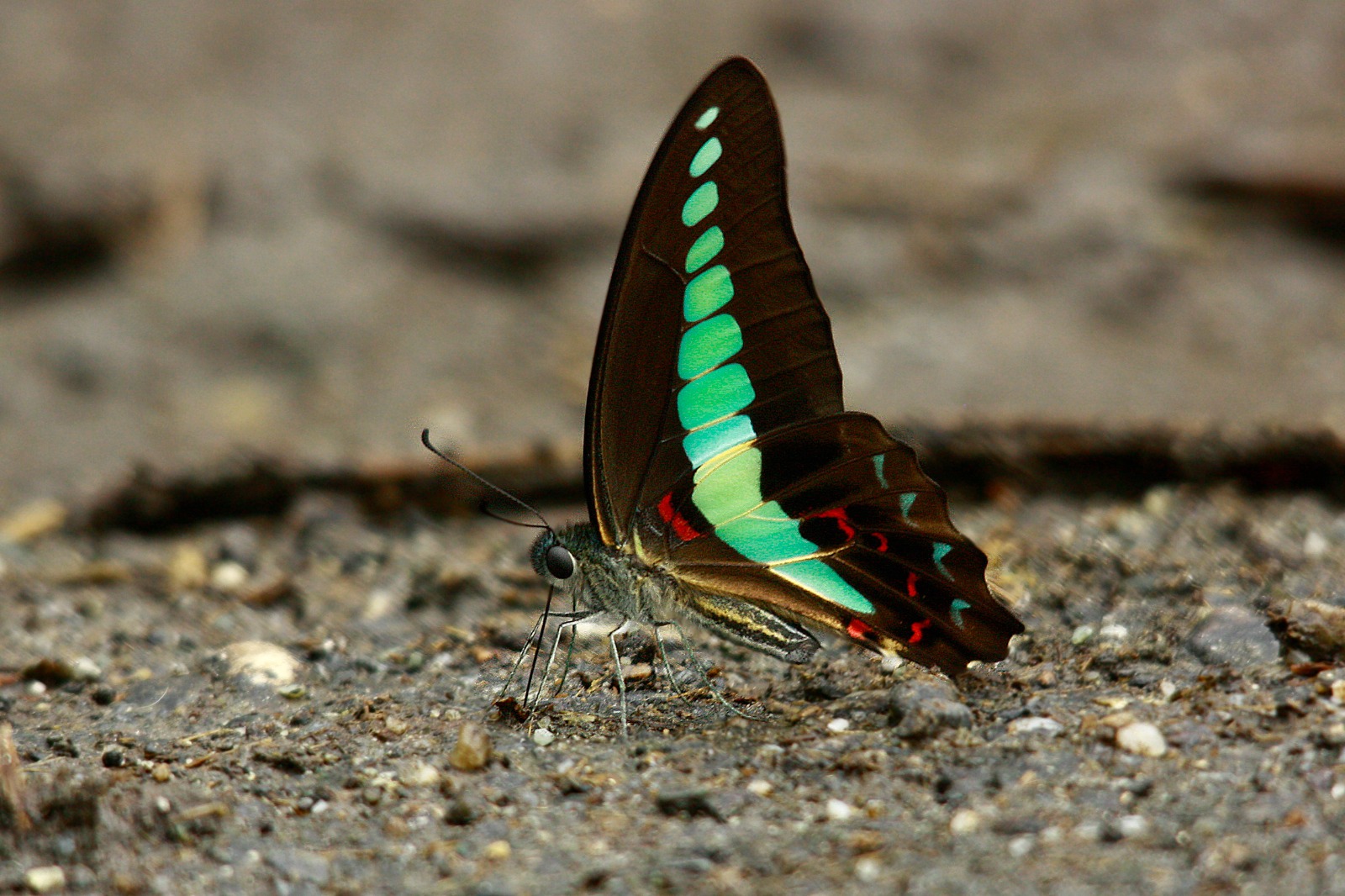
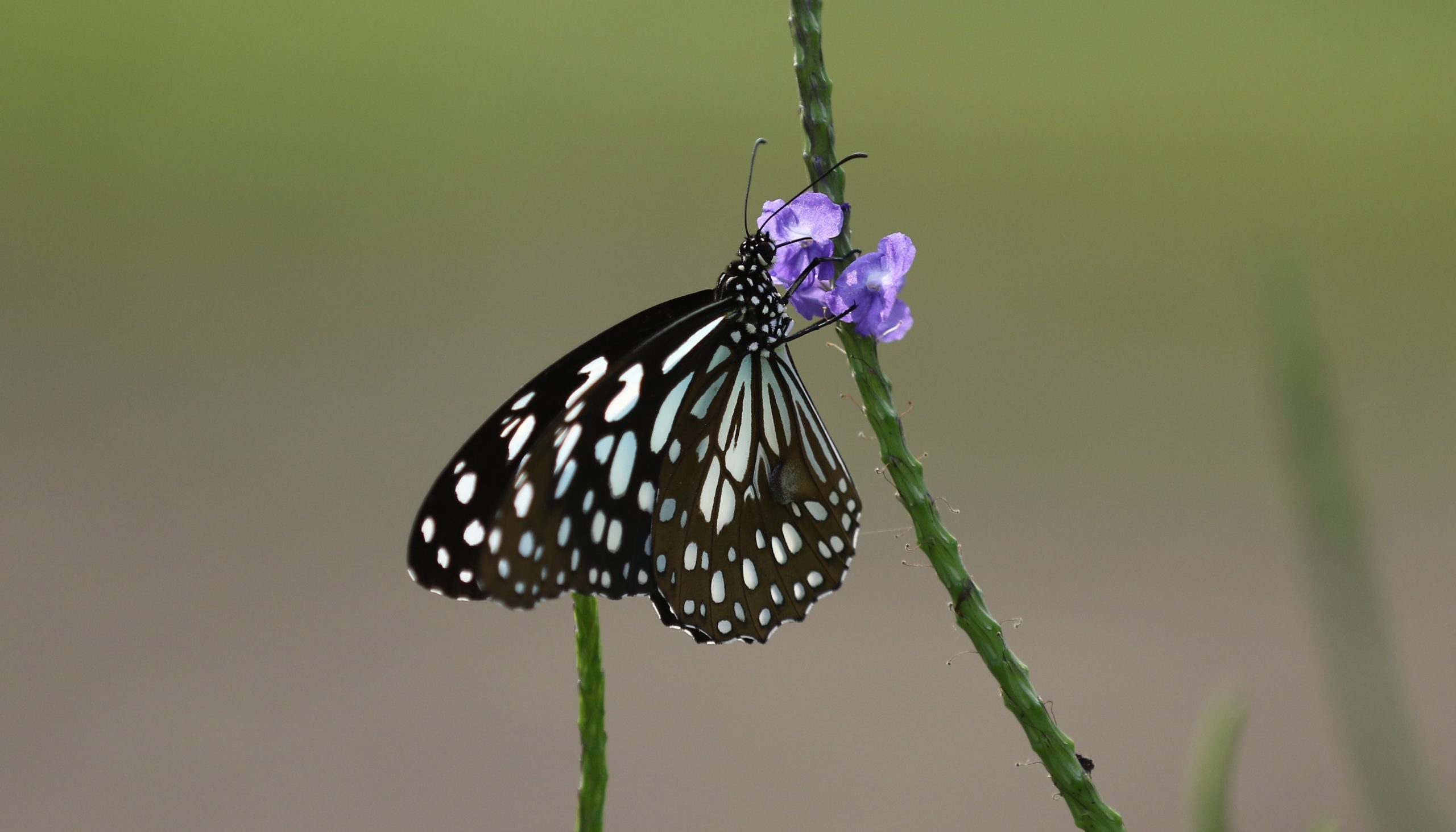
- Chocolate Tiger (Graphium eurytus): A common species found in the region, this has dark-coloured wings and is found in the eastern Himalayan region extending up to Mynamar.
- Common Mormon (Papilio polytes): A species of large swallowtail butterfly found extensively in the region. Its females are known to exhibit polymorphic forms, mimicking other species.
- Punchinello (Zemeros flegyas flegyas): A species often seen in the region, which was recorded for the first time in a study in Dehing Patkai National Park.
- Metok Green Sapphire (Heliophorus gloria): Pretty rare in occurrence, this is one of two species recently discovered in India during an expedition in Mechukha, Arunachal Pradesh. The species was previously known to exist only in the Metok region of south-eastern Tibet.
- White Dragon Tail (Lamproptera curius): A rare and distinctive butterfly with a slender tail on its hindwings documented in various states of Northeast India like Assam, Arunachal Pradesh, Meghalaya, Mizoram, and Tripura.
- Indian Purple Sapphire (Amethystine Sapphire): Not a gemstone, this species with deep blue-purple colouration is typically found in higher altitudes in hilly or forested regions.
- Medog Tufted Ace (Sebastonyma medoensis): A rare butterfly species that was officially documented in India for the very first time in 2005. It marked a significant milestone in India’s lepidopteran research.
This article was first published in Environ Oct-Dec’25 issue.
TAGS –
